Area Restaurants
Lodging & Transportation
Retail & Business
Festivals & Events
Heritage Tourism
Arts & Entertainment
Sports & Athletics
Meeting Planners & Media
Relocation
Chamber of Commerce 


Group Tours | Museums and Places of Interest | Historic Sites Texas Historical Shootists Society | Columbus History |  Historical Preservation Trust, Inc. 

Heritage Tourism


The City of Live Oaks, est. 1822

«««

One Hundred Eighty Five Years of History


The arrival of Austin's Colony:  The Original 300

The first settlers arrived in the area about Christmas 1821 and established a settlement along the Colorado River that came to be known as Beeson's Crossing.  These early settlers fought drought, Indian attacks and illness to hold their new homes. 

The town of  Columbus was surveyed and platted two years later in August 1823 by some of the original 300 families of the Stephen F. Austin Colony.  The colonists were put in possession of the land by the Mexican government in a unique manner, with this excerpt from one land grant being typical of all:

"We put the said Elizabeth Tumlinson in possession of said lands, taking her by the hand, leading her about them and telling her in loud and audible tones that, by virtue of the omission and of the powers vested in us and in the name of the Government of Mexican Nation, we put her in possession of said Land with all their uses, customs, privileges, and appurtenances, for her, her heirs and successors.

And the said Elizabeth Tumlinson, in evidence of finding herself in real and personal possession of said Iands without any opposition whatever shouted aloud, pulled herbs, threw stones, set stakes and performed the other necessary ceremonies, she being reminded of her obligation to cultivate them within two years, the term prescribed by law."

Texas Struggle for Independence from Mexico

The village of Columbus was laid out and named in 1835, the year the first call was made to colonists to resist the demands of the Mexican forces. In September Colonel J.W.E. Wallace headed a band of Columbus men to Gonzales when the Mexicans demanded the arms and cannons of the colonists. During the following March, the Alamo fell and Fannin's men were massacred at Goliad.  General Sam Houston's Texas army was forced to retreat from Gonzales with the Mexican army in close pursuit.

The Texans camped on the east bank and the Mexicans on the west bank of the Colorado River at Columbus. The Texans sent urgent pleas to the east for volunteers and making preparations for the battle. Although there were only about 800 men in Houston's army, most of them, including Mosely Baker, Mirabeau B. Lamar and David G. Burnet, wanted to cross the river and give battle to the Mexicans at once.

On the night of March 24,1836, General Houston summoned W.B.. Dewees to headquarters. He was ordered to take two men, cross the river, and observe the Mexican encampment. The men climbed tall trees and at dawn they noticed an unusual parade, a burst of music and booming of a cannon. Santa Anna had crossed the Guadalupe at Victoria, so Houston surmised the increased activity across the river marked Santa Anna's arrival with additional troops. Knowing it was impossible to fight in his present position, Houston, addressed the soldiers:

"Fellow Soldiers, the only army in Texas is now present. Travis has fallen with his men at the Alamo. Fannin’s troops have been massacred at LaBahia. There are none who will come to my aid. The citizens of the east dare not or will not come to aid us. There is here but a small force, yet it is the only army Texas can offer. We might cross the rive and attack the enemy; perhaps we might be victorious, but again we might be overcome.

If we are overpowered by General Sesma’s army which has, without a doubt, been largely reinforced during the past night by the army under General Santa Anna, we have no other army to retreat back upon. We cannot expect reinforcements. I have called for volunteers, but almost in vain. There are but a few of us, and if we are beaten, the fate of Texas is sealed.

The salvation of the country depends upon the first battle had with the enemy. For this reason, I intend to retreat and I shall continue to retreat until I find I can beat the Mexicans in battle, if I am obliged to go even to the banks of the Sabine."

With the conclusion of these words, all the buildings in Columbus were set afire and Houston retreated to the San Jacinto where he surprised the enemy and won a decisive victory over Santa Anna's forces on April 21,1836.

All the settlers fled east before the armies in what became known as the Runaway Scrape, but with peace they slowly returned to the ashes of their homes.

The Creation of a New County

The work of organizing the county was completed in 1837 with portions of Colorado County afterward used in the creation of Fayette, Lavaca and other adjoining counties.

Since all buildings in Columbus had been destroyed, plans were made for the construction of a courthouse early in 1837 in preparation for the first term of court for the Republic of Texas. Lumber was cut near Bastrop and floated down the Colorado River, to be caught by an obstruction placed in the river for that purpose. The obstruction failed to hold, the lumber was lost, and it was necessary to hold the first term of court under a majestic oak tree which still stands by the courthouse.

Judge "Three-Legged Willie" Williamson

The court was presided over by Judge Robert McAlphin Williamson, known as "Three·Legged Willie" because of a wooden leg attached to his crippled left leg. Judge Williamson was a colorful lawyer and newspaper editor whose company was in great demand on the frontier because of his natural bent for theatrics. He was equally at home conducting court, a revival meeting, or a minstrel show. For the latter occasion, he played a banjo and beat time with his wooden leg.

A ferry was built in 1845, and Columbus became a shipping point for cotton and other farm products and a stopping place for wagon trains going west The first Texas railroad terminated at Alleyton in 1860. A bridge spanned the river in 1866 and the community continued as a shipping point.

The Civil War Years & Reconstruction

The majority of the Columbus and Colorado County residents voted in favor of secession in 1861. The old and very young served in the Texas Home Guard, or "Heel Flies", while the women and children attempted to keep the farms in operation. Reconstruction years followed with a slow growth based on an agricultural economy.

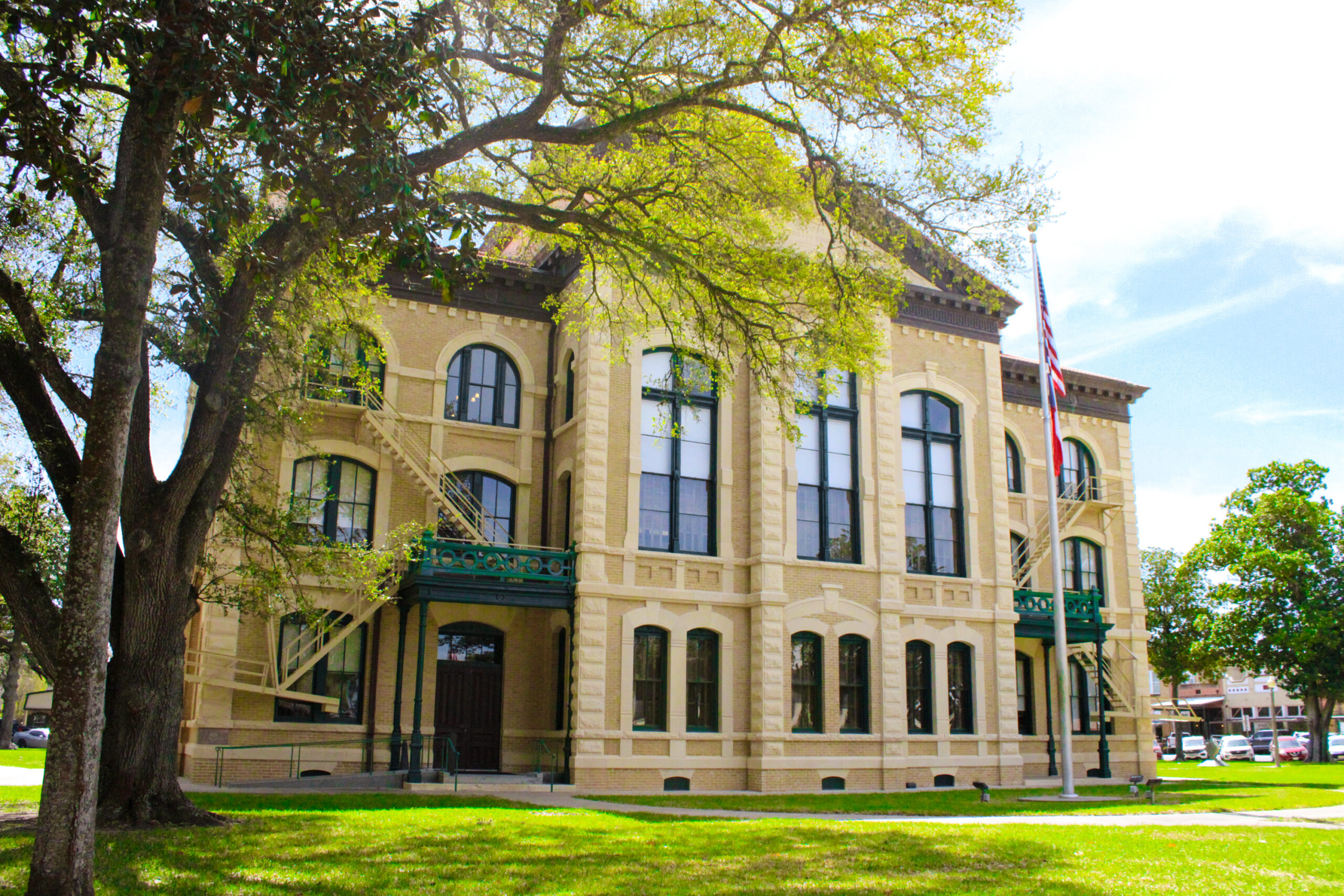
After the Civil War, many southerners fled west to avoid the hardships of reconstruction.  One of those was Robert Stafford.  A banker, rancher and businessman from Georgia, Stafford built a meat-packing operation near the Colorado River and located a bank in downtown Columbus.  In 1886, he contracted with well-known Galveston architect Nicholas J. Clayton to build an opera house downtown.  In 1886, the Stafford Opera House and Bank opened to great acclaim.  Unfortunately, Stafford's success lasted only four years as he and a brother were shot and killed in 1890 during a gunfight that set off a 20 year feud.  This event occured on the same day that the cornerstone was laid for the new courthouse.  This courthouse still stands, although modified to include a beautiful, Tiffany-style stained glass dome as the original clock tower was blown off during a 1909 hurricane.

A New Era: Preservation

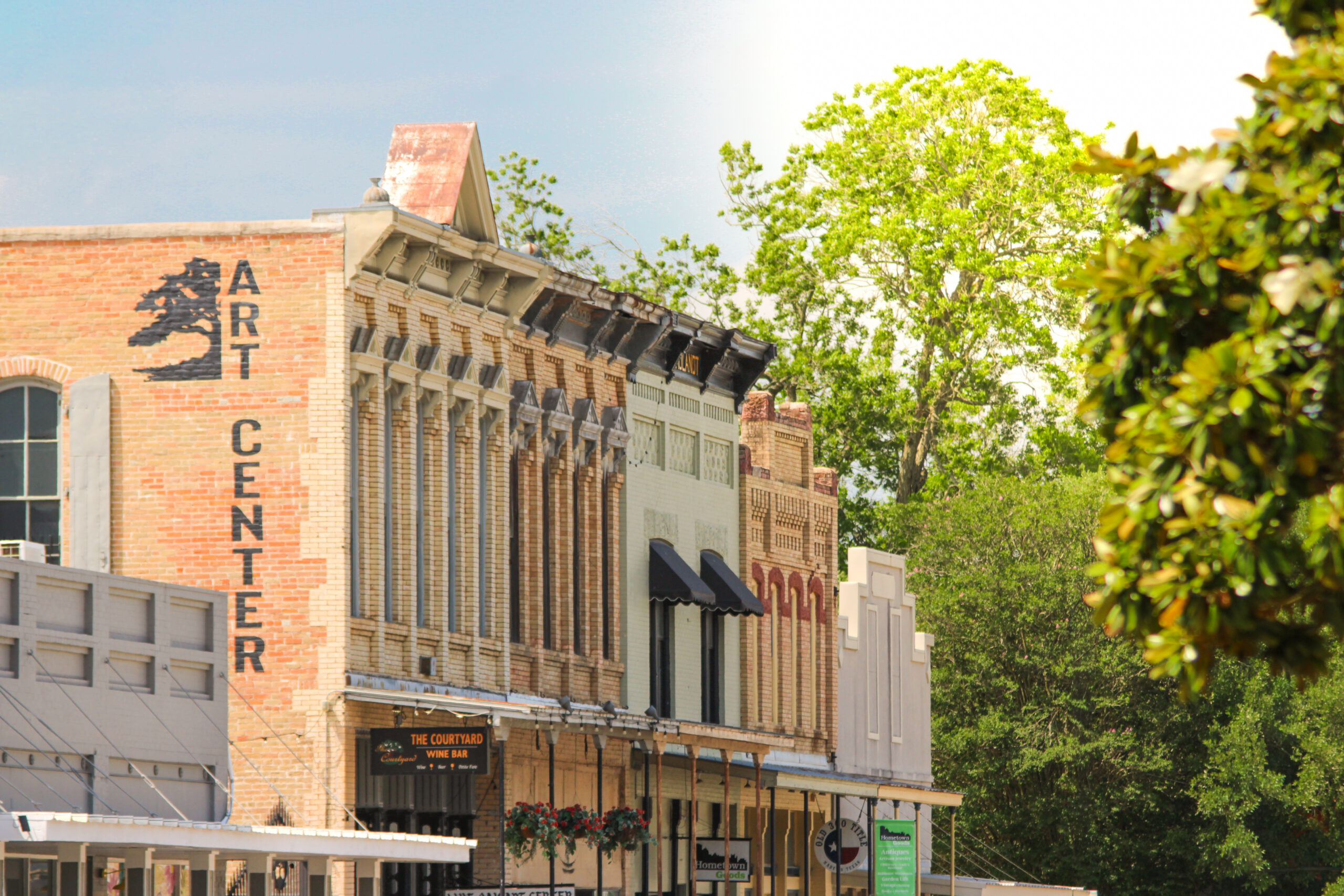
Magnolia Homes Tour, Inc., a historical preservation society, was founded in the spring of 1961 due to the tremendous interest in the old homes and businesses concentrated in and around Columbus. Now known as the Columbus Historical Preservation Trust, Inc., this prestigious organization manages a variety of historic buildings, hosts a candlelight homes tour the first weekend in December during the Christmas on the Colorado festivities, and, along with the Live Oak Art Center, participates in the Columbus Springtime Festival. 

Held annually the third weekend in May for more than 50 years, The Live Oak Festival features fine art, historic homes tours, antiques, a sidewalk cafe on the courthouse square, theatrical performances, live music and the Greg Lundgren 5K Run.

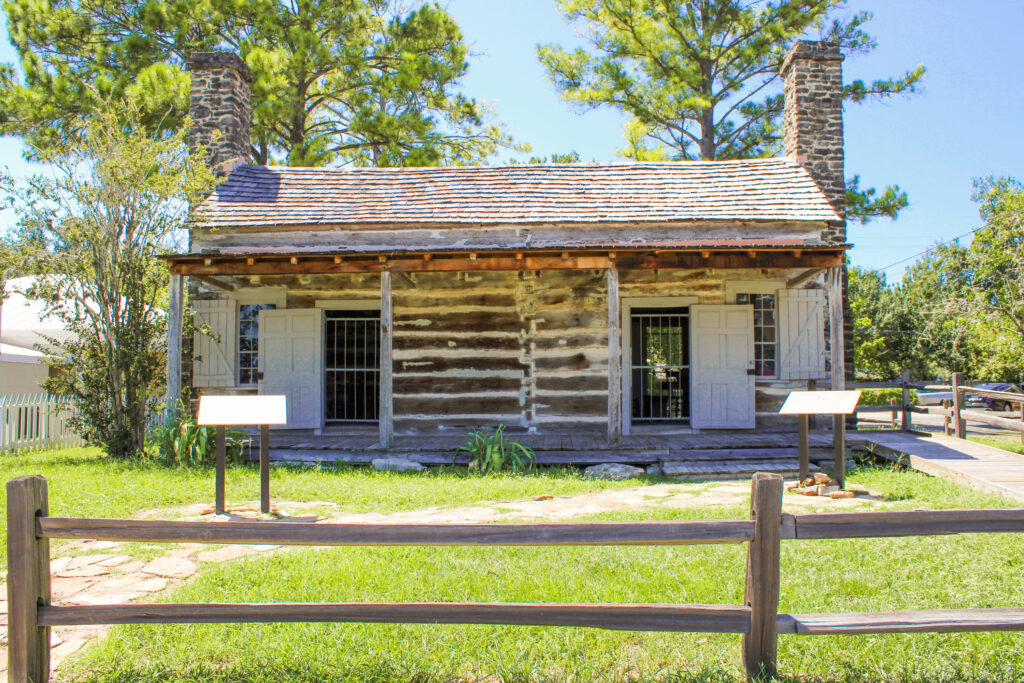
Medallions of the State Historical Survey Committee have been placed on almost 80 sites in Columbus, including the Confederate Hall Museum, opened in 1962 by the United Daughters of the Confederacy in the old water tower, the Courthouse, Stafford Opera House, Tait Town House, Dilue Rose Harris Home and others. Tree lovers must see the Second largest Recorded Live Oak Tree in Texas and the District Court Oak.

Columbus was designated by Governor Bill Clements as the official 1992 Quincentennial Town of Texas for the National Celebration of the 5OOth Anniversary of Christopher Columbus' Voyage to the New World.

And Columbus, a founding member of the Pioneer Trails program, has been recognized as an active member of the award-winning Texas Historical Commission's Heritage Trails Program, the Texas Independence Trail Region.

Today, this little town on the river is a charming weekend destination for city dwellers, art lovers, empty-nesters and amateur athletes all looking for a place to get away to pursue their passion.  The Colorado River provides the availability of tubing, canoeing, swimming, fishing and other water related activities. Recreational facilities in Columbus include a city swimming pool, and excellent 9-hole golf course, lighted football and baseball fields and livestock show arena.

Top of Page | Back a Page